Brain Dump Templates: Your Creative Sanctuary for Ideas
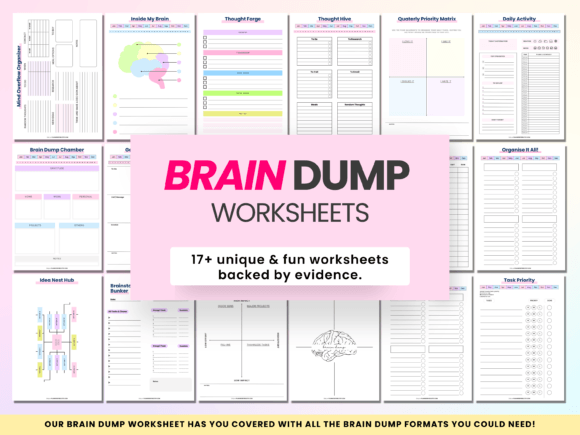
That feeling of a mind overflowing with ideas is both exhilarating and overwhelming. You have a brilliant concept for a new product, a marketing campaign angle, or a personal project, but it's tangled up with your grocery list, a looming deadline, and a half-forgotten errand. This is the chaos our newest Brain Dump Worksheets were designed to conquer. They are not just blank pages; they are structured sanctuaries for your thoughts, providing the framework you need to capture, organize, and ultimately unleash your best ideas.
More Than a Template: A System for Clarity
Think of these worksheets as a dedicated thought organizer. The visual design is intentionally clean and intuitive, avoiding distracting graphics so your ideas remain the focal point. Each section is crafted with a specific purpose, creating a natural flow from raw ideation to actionable steps. You’ll find dedicated spaces for your core "big idea," branching thoughts, potential challenges, and the very next action to take. This structure acts as a daily task tracker for your creative mind, helping you move from a state of mental clutter to focused execution.
The true power lies in its dual function as both a brainstorming tool and a project incubator. For an entrepreneur, it can map the journey from a market gap to a viable business plan. A content creator might use it to develop a single video idea into a full content series. A crafter can sketch out a project, list materials, and note variations. It’s a flexible ideas tracker that adapts to your workflow, whether you prefer to work on paper for that tactile connection or use a digital version on your tablet.
Where This Creative Tool Truly Shines
The application for these Brain Dump Templates extends across nearly every professional and personal endeavor. In branding and marketing, they are invaluable for developing a cohesive brand identity. Jot down all the adjectives, emotions, and visual references that come to mind for a client's brand, then use the structured sections to group them logically. This process ensures that your final brand strategy and visual assets are built on a foundation of organized thought, not just a scattered mood board.
For designers and publishers, the templates serve as a perfect pre-design phase. Before you even open your design software, use a worksheet to outline the editorial design for a magazine spread, plan the user flow for a web design project, or structure the narrative for packaging design. This upfront organization saves countless hours during the production phase. The clarity it provides also directly influences your final output; when your ideas are organized, your designs communicate more effectively, enhancing readability and establishing a stronger visual hierarchy.
Even in the realm of personal productivity, these worksheets are a game-changer. Use them as a declutter organizer for a home renovation project, a community event you're planning, or even a series of social media graphics for a hobby account. The act of dumping everything onto the page and then using the template to sort it reduces anxiety and builds momentum. It turns a daunting list of tasks into a manageable, step-by-step plan.
Integrating the System into Your Workflow
Adopting any new system requires a bit of intentional practice. The first step is simply to start. Don't wait for the "perfect" idea to use your first sheet. Use it to plan your week or deconstruct a current challenge. The goal is to build the habit of externalizing your thoughts onto this structured platform.
Consistency is where you'll see the real benefits of this thought organizer. Carve out a regular time, perhaps 15 minutes each morning or during a weekly planning session, to do a brain dump. Over time, you'll create a personal archive of ideas and plans that you can refer back to, which is a powerful resource for any creative professional or small business owner. This archive becomes your own library of concepts, ready to be revived when the time is right.
Finally, remember that the template is a guide, not a rigid rulebook. If a section doesn't fit your current project, skip it. If you need more space for a particular area, use the back of the page. The aim is to make the tool work for you, not the other way around. By personalizing its use, you ensure it becomes a seamless and indispensable part of your creative and productive process, helping you consistently move from a state of overwhelm to one of focused, actionable clarity.